Trail Camera IP67: Why Your Build Should Go Beyond IP66
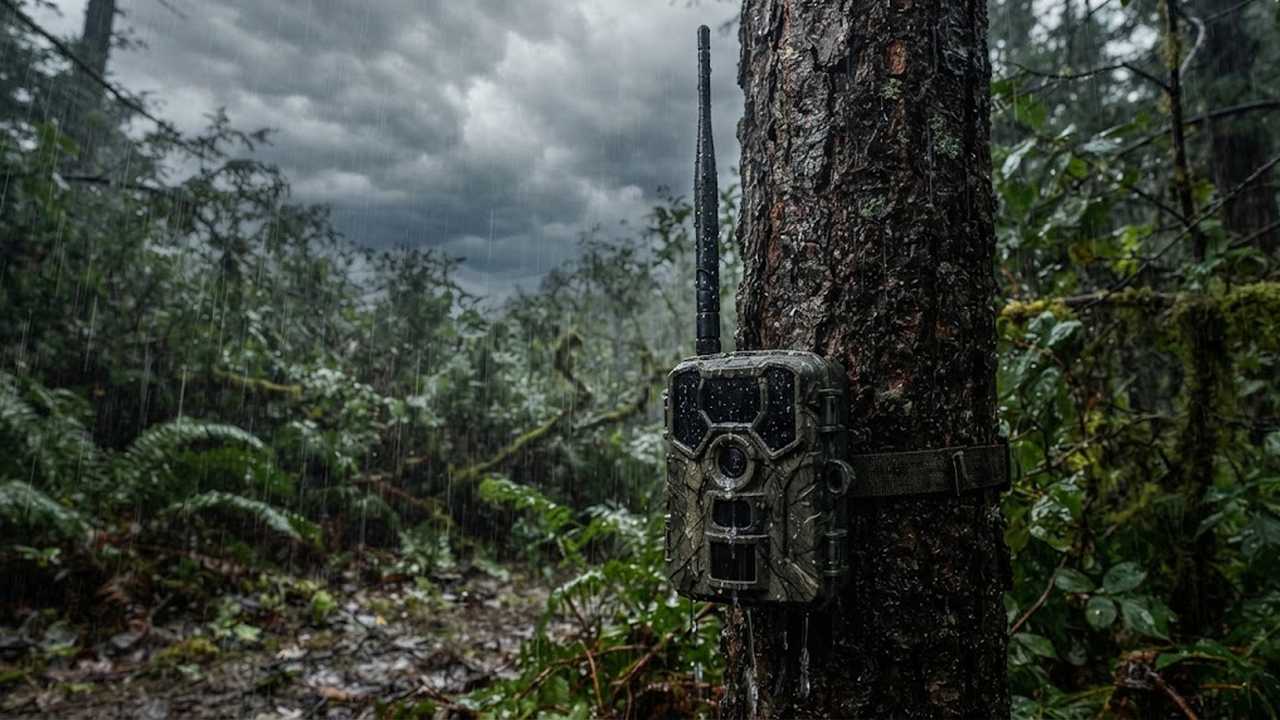
A trail camera lives outside 24/7 — through monsoons, dust storms, freezing nights and the occasional pressure-washer. The standardized number that tells you how it survives that is the IP rating. Most listings stop at IP65 or IP66 and call it done. This guide explains why, for flooded, riverbank, coastal or year-round outdoor builds, IP67 is the rating that actually removes the risk — and decodes the digits for buyers who specify, not just shop.
If you are an OEM/ODM buyer building a camera under your own brand, the rating is only useful if you know what it covers, what it quietly omits, and why two cameras with the same number are not built the same. Read on for the decoder, a comparison table, and a short specification checklist you can drop straight into an RFQ — built around the IP67 level most suppliers skip.
What "IP" actually stands for
IP means Ingress Protection, defined by IEC 60529. It is a two-digit code for how well an enclosure keeps solids and liquids out. It says nothing about impact resistance, operating temperature, UV stability, or how long the seals last — all of which matter more for a trail camera than the digits suggest. Treat IP as one axis of ruggedness, not the whole story.
The two digits, decoded
The first digit is protection against solids (dust, grit, pollen). For trail cameras the only number you will see is 6 — "dust-tight," meaning no harmful amount of dust can enter during the test. Anything below 6 lets fine particles through, and fine desert or agricultural dust is exactly what kills electronics over a season.
The second digit is protection against liquids:
- IPx4 — splashing water from any direction.
- IPx5 — low-pressure water jet.
- IPx6 — powerful water jet (around 100 L/min). This is the one that matters for a camera facing storms and the occasional hose-down.
- IPx7 — immersion up to 1 m for 30 minutes. Useful near riverbanks or flood-prone sites, but it is a temporary-immersion test, not a diving rating.
- IPx8 — immersion beyond 1 m, defined by the manufacturer.
For a trail camera, a high-pressure jet rating (IPx6) is more relevant than immersion (IPx7), because the unit is mounted, not submerged. A camera rated only IPx4 or IPx5 will eventually let driving rain past the seams.
IP ratings compared
| Rating | Solids (1st digit) | Liquids (2nd digit) | What it means in the field |
|---|---|---|---|
| IP64 | 6 = dust-tight | 4 = splash | Marginal. Fine for a sheltered porch, not for year-round outdoor deployment. |
| IP65 | 6 = dust-tight | 5 = low-pressure jet | Better, but a hard storm or direct hose still stresses the seals. |
| IP66 | 6 = dust-tight | 6 = powerful jet | The outdoor trail-camera standard. Shrugs off storms and pressure-washer cleaning. |
| IP67 | 6 = dust-tight | 7 = immersion 1 m / 30 min | Adds flood and riverbank safety. Temporary immersion only, not continuous submersion. |
The industry default sits at IP65/IP66, and most listings never reach for IP67. But for flood-prone, riverbank, coastal, or year-round outdoor builds, IP67 is the rating that actually removes the risk — and it is the level Xlinkcam targets as standard for rugged deployments, not an upgrade line item. If a supplier quotes anything below IP66 for an outdoor unit, ask why; if your sites see standing water or driving spray, ask for IP67 specifically.
What an IP rating does NOT tell you
- Temperature. IP says nothing about the operating range. Desert heat and -20°C winters are a separate specification — confirm it independently.
- Condensation. A housing can be jet-proof yet fog up inside when warm, humid air cools overnight. Gasket quality, a desiccant pack, and vent design decide this, not the IP number.
- The battery and SIM door. This is the usual failure point. A perfect body seal is worthless if the door gasket flattens after a few open-close cycles.
- UV and brittle plastics. Sun turns cheap housings chalky and crack-prone within a season. IP does not measure that.
- Impact and vandalism. A thrown rock or a curious bear is an IK-rating problem, not an IP one.
Why two "IP66" cameras are not equal
The rating is granted on a sample tested in a lab, not on every unit off the line. The real difference is in manufacturing:
- Gasket material. Silicone holds its shape and reseals far better than cheap foam or rubber that flattens permanently.
- Closure points. More evenly spaced screws mean even compression; a single loose corner is where water enters.
- The lens ring and antenna base. These are secondary seal paths that weak designs overlook.
- Consistency. Ask for the test report and, for volume orders, a per-batch ingress check rather than a one-time certificate.
The solar-panel constraint: why add-on power tops out at IP66
A question that comes up often from buyers is why a 4G trail camera with an external solar panel is rarely rated above IP66, even when the body itself could be sealed higher. The reason is mechanical, not electronic. The cable from the solar panel to the camera body has to pass through the housing, and keeping that pass-through watertight requires a specific structural change at the entry point — typically a molded cable gland, a sealed grommet boss, or a custom housing feature around the connector.
That change carries both a structure/tooling barrier and a clear cost increase. A standard housing can be sealed at the factory without it; adding a proper cable-entry seal means a new mold feature, tighter tolerances, and more assembly steps per unit. Many newer entrants skip it and rely on the body's IP66 alone, leaving the cable joint as the weakest link. For a deployment that depends on always-on solar trickle charging, that joint is exactly where moisture creeps in over a season.
For specifiers, the takeaway is simple: if your build needs external solar power and you want protection above IP66 at the panel interface, ask the supplier directly how the cable entry is sealed and whether that seal is rated, not assumed. That is also why IP67 is so rarely advertised on solar-equipped models — and why treating the cable entry as a rated seal, not an afterthought, is the difference between a camera that survives one season and one that survives five.
Specifying weatherproofing for your deployment
Match the rating to where the camera actually sits. For a MMS trail camera on a remote lease, IP66 plus a good door gasket is the baseline. For cloud-storage or live-stream units near water, ask whether IP67 is warranted. SMTP and FTP builds in agricultural or construction dust need the dust-tight 6 and a stated temperature range.
A short checklist to put in your RFQ:
- IP rating and the test standard (IEC 60529) — request the report.
- Gasket material and expected re-seal life after open-close cycles.
- Operating temperature range, stated separately from IP.
- Condensation mitigation (desiccant, venting) for your climate.
- Battery/SIM door seal design and per-batch ingress verification for volume runs.
These points pair naturally with the connectivity and night-vision choices you are already making — see our notes on cellular vs Wi-Fi, no-glow vs low-glow IR, and trigger speed and PIR. For the platform basics, start from what a cellular trail camera is.
Where Xlinkcam fits
Xlinkcam builds outdoor cellular trail cameras as an OEM/ODM partner, and IP67 is where we focus the build — not the IP65/IP66 most listings stop at. Standard outdoor housings are sealed to IP66-class as a baseline, and for flood-prone, coastal, riverbank, or year-round deployments we take both the housing and the cable entries (including external solar feeds) to a rated IP67, with silicone gaskets, sealed battery/SIM doors, and per-batch ingress verification. Because the connectivity, night-vision, and enclosure decisions are made together, you can brief one team on the whole build instead of reconciling separate suppliers.
Talk to us
If you are specifying trail cameras for a harsh environment — construction, forestry, agriculture, flood-prone or remote wildlife sites — tell us the deployment and we will match the IP67-rated enclosure, cable-entry seals, and temperature range to it, with the test reports to back the claim. Talk to our team before you lock the spec.