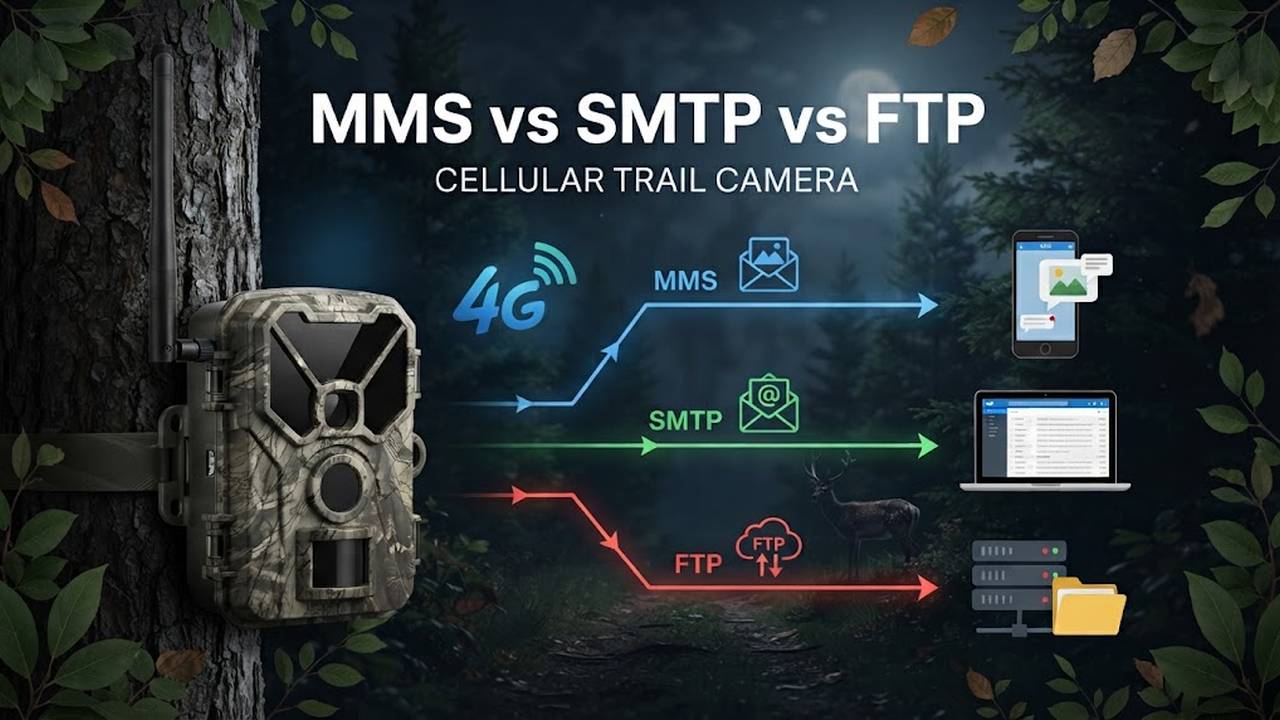
All protocolsMMSSMTPFTPCloud StorageLive Stream
How it works

How Live Stream gets the image out

  1. 1Encode H.264 / H.265
  2. 2Expose RTSP stream
  3. 3NVR / VMS pulls
  4. 4Live low-latency view
  5. 5Record / replay

The camera encodes H.264/H.265 video and exposes a standard RTSP stream. Any NVR, VMS or player that speaks RTSP can pull it for a live view with low latency. Streaming is on-demand or continuous, depending on the model and your bandwidth.

At a glance

Key parameters

ProtocolStandard RTSP
CodecH.264 / H.265
LatencyLow-latency live
Works withAny NVR / VMS / player
Two-way audio / PTZOn capable models
Best forSecurity / perimeter / research monitoring
Features & characteristics

What makes Live Stream different

How to choose

When to use Live Stream

Choose Live Stream when you need video, not photos — perimeter security, live wildlife watching and monitoring all benefit. Standard RTSP means it slots into gear you already run.

For recorded archive and remote access, pair it with the Cloud API. For low-bandwidth alerting, MMS or SMTP are lighter.

Best fit

  • You need video, not photos
  • Perimeter security and live watching
  • Monitoring you already run NVR / VMS for
  • Low-latency situational awareness

Look elsewhere if

  • Low-bandwidth locations
  • You only need motion snapshots
FAQ

Common questions about Live Stream

Is a proprietary client required?
No. Standard RTSP plugs into the NVR or VMS you already run.
Is the latency high?
RTSP live pull keeps latency low, which is what makes it suitable for monitoring.
Can footage be recorded and replayed?
Yes. Pair the live stream with a storage layer for recording and replay.
How does Live Stream work with the Cloud API?
The Cloud API handles remote access and recorded archive while Live Stream provides the real-time picture.
Products

Cameras that support Live Stream

From the blog

Related articles

Need a custom Live Stream solution?

Talk to our engineering team about OEM/ODM, white-label firmware and API integration.

Contact engineering →