Golf Course Trail Camera OEM/ODM: From Scenario to Custom Build
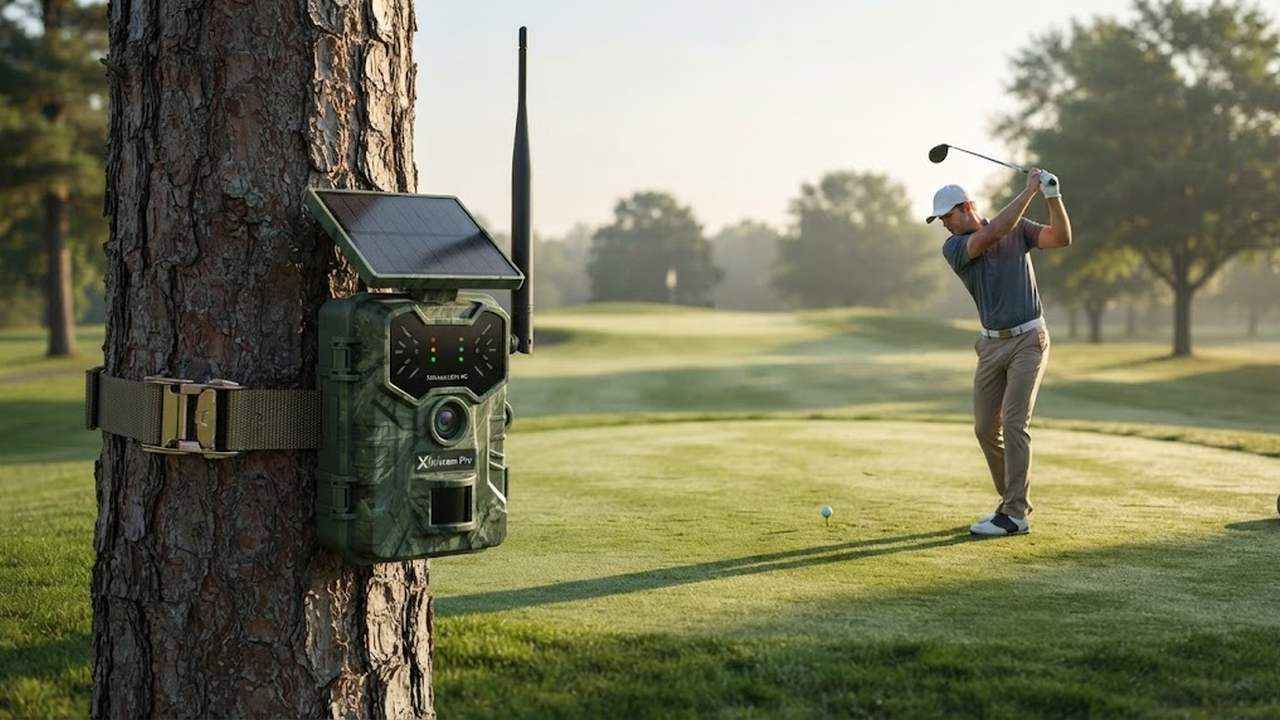
A golf course is an odd place to talk about trail cameras — open, manicured, busy by day. But look past the fairways and the same problems appear that we solve for customers everywhere: valuable equipment left outdoors, wildlife damaging the grounds, no wired network across hundreds of acres. A golf course is just one scenario where outdoor imaging does real work. The more useful point is how we take a customer's specific scenario and turn it into a working OEM/ODM product — which is what this post walks through, from a project we have already shipped to a concept we are still evaluating.
What we actually build: a platform bent to the customer
Our work is B2B monitoring where a customer needs a camera shaped to their operation, not a sealed consumer gadget. A clear example is a North American farm and remote-property security deployment. The operator needed to watch equipment, storage, and perimeter across sites with no wired network and harsh weather. A rugged cellular trail-camera platform fits because it is wireless, weatherproof, and built to sit outdoors for months on solar and battery — no trenching, no power points.
The harder problem was commercial, not technical. In this market the usual path is "cheap camera, paid cloud" — which quietly hands the operator's data and recurring revenue to the platform vendor and locks the dealer into one ecosystem. We took the opposite approach: the same rugged camera can run with no subscription at all, pushing images over MMS or SMTP or storing on local SD, with cloud only as an optional layer the customer controls. Because the units expose an API and SDK (our cellular and cloud technology), the customer owns the integration and the platform. What we solved was practical: wireless durable monitoring, freedom from a forced subscription, and full platform ownership. The reason this matters beyond one farm is reuse — a monitoring deployment and a golf concept can share the same rugged, open platform, and that shared base is what keeps custom work affordable.
Why we engage with an idea-stage inquiry
A reasonable question: if a customer is only at the idea stage, why would we spend engineering effort on it? The answer is that an early inquiry is not a favor we do for a dreamer — it is a qualified OEM lead, and engaging early is normal business development.
What makes a lead qualified is three things: a concrete technical spec rather than a wish, a realistic path to volume (samples, then a pilot, then production), and alignment with capabilities we already have. For a lead like that, we run a feasibility evaluation. That evaluation is both a service to the customer and the gate to a paid sample order — if the concept is buildable, it becomes a sample engagement; if it is not, we say so early and save everyone time. The effort is bounded and commercial, not open-ended research. That is the difference between chasing an idea and developing a product. We do not start fabrication on a hunch; the evaluation comes first precisely so the engineering effort is justified by a real spec before any unit is built. A qualified lead also de-risks our own investment: every customization we validate feeds back into reusable modules, so the next customer starts further ahead.
The golf case: a par-3 shot-recording system
A UK founder is building an autonomous recording system for par-3 holes. The concept: two outdoor cameras per hole — one behind the tee, one near the green — capture the swing and ball flight; a golfer scans a QR code to start a paid session; the footage goes to the founder's own platform; the golfer receives a video on their phone. Longer term he wants on-device AI to detect and trace the ball.
Crucially, he is building the software himself and came to us for the hardware and manufacturing. His business model is to install branded systems on courses and earn recurring revenue from recording sessions, rather than selling cameras to consumers — which is what makes the volume path credible rather than speculative. His spec is detailed enough to be a real engineering brief: 4K at a high frame rate with a fast shutter to freeze a small, fast ball; an IP66 enclosure; RTSP/ONVIF streaming and API/SDK so his server controls the cameras rather than a manufacturer's app; 4G connectivity; solar or battery power with low-power standby between sessions; and headroom for future AI ball tracking, which is a different problem from standard human detection. He has a clear volume path — a few sample units for a UK course trial, then a pilot across several holes or courses, then production as more courses onboard — and he chose us for our outdoor imaging, 4G/solar, and OEM track record. The dual-camera and QR model is a sensible target precisely because it reuses that platform rather than inventing new hardware; the novel part is the software and the integration, which is his to build.
What the evaluation actually covers
For a concept like this, the evaluation focuses on where the spec meets reality. Can available modules reach 4K at a frame rate and shutter speed fast enough to freeze the ball? Can a QR or web trigger start and stop a remote 4G session with acceptable latency, capturing the three to five minutes needed and then returning the units to standby? How much rolling buffer and SD storage that capture requires? Whether solar and battery sustain the duty cycle on a tee box? And how much of the firmware is custom versus reusable from existing platforms. The AI ball-tracking ask is the clearest example of where spec meets reality: detecting a small, fast, often-blurred object against sky or grass is a different problem from the human or vehicle detection that off-the-shelf models handle, and it shapes both the sensor choice and the firmware budget. We work through these with the customer, because the answers define what a sample actually is — and whether the commercial product is realistic. By the end of the evaluation we can tell the customer, with numbers, whether a sample is worth building and what it would take.
Bring us your scenario
If you have a monitoring scenario that needs a camera bent to fit — golf, agriculture, security, or something untested — bring the concept and where it has to work. We will tell you straight what is buildable and what a sample would take. Talk to our OEM/ODM team.