Cloud Trail Camera Subscription Models: Who Wins, Who Pays
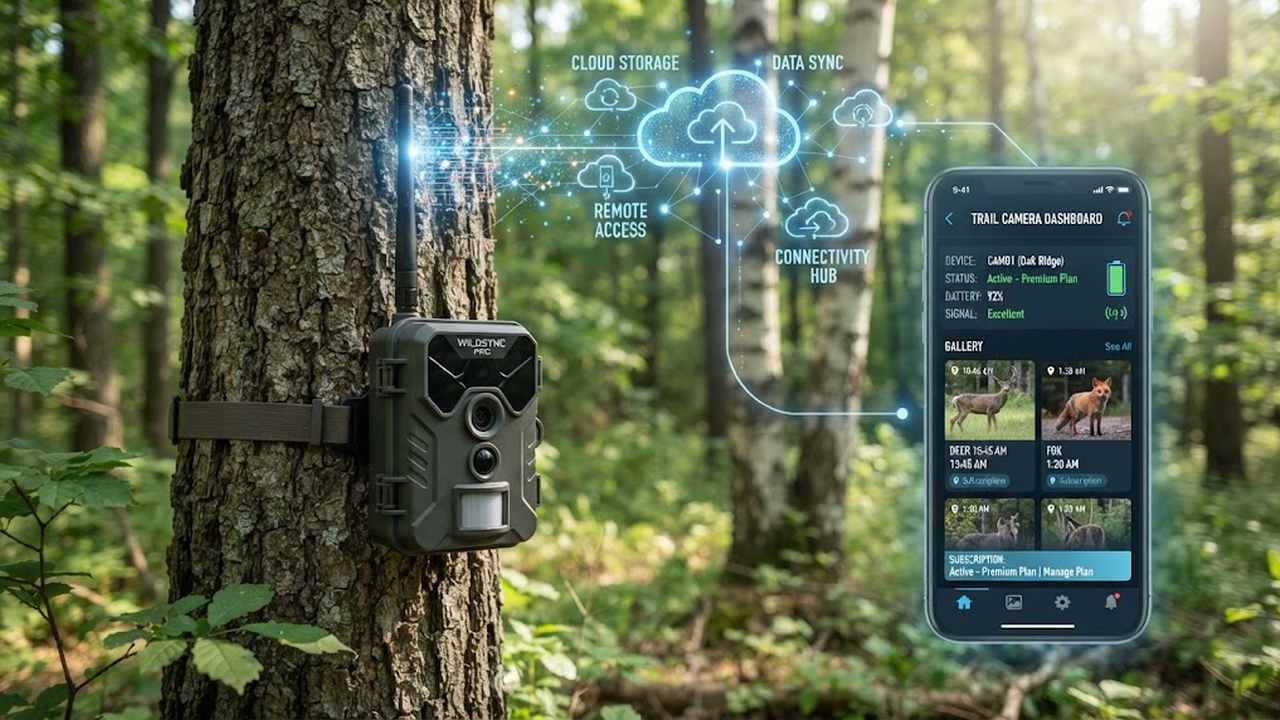
A clear look at the mainstream cloud trail camera subscription model — who it actually serves, why it stacks up badly for end users and resellers alike, and how Xlinkcam builds the product while leaving the business model to its clients.
For most of the last decade, a trail camera kept its pictures on an SD card in the field — you only saw them when you walked out to collect the card. Cellular models added MMS, pushing a small image to your phone when something moved. Cloud storage changed the experience again: a camera can now also send its photos to an app from anywhere. As a cellular trail camera manufacturer serving North American farms and European wildlife monitoring, we have watched all three shifts from the factory floor. This article is for the distributors, resellers, and integrators trying to make sense of where the market went — and what it means for the control they keep over their own products.
How Cloud Storage Became the Default
The story of the cloud trail camera is really a story about remote access. On a traditional camera, the pictures live on an SD card in the field, and you only see them when you visit the camera. Cellular plus cloud added a second copy that lands in an app from anywhere — so you can check the camera without a site visit, and you keep an off-site backup if the unit is stolen or damaged.
But here is the part the marketing usually skips: the cloud copy sits on top of local storage, not instead of it. Most cellular cameras still write the full-resolution file to an SD card (or built-in memory) in the camera, then send a smaller version to the cloud. A few newer models, such as Moultrie's EDGE line, replace the SD card with built-in memory — but the principle is the same: there is always a local copy in the device itself. The subscription you pay covers the remote, cloud layer — the convenience of seeing it from your phone and the backup — not the removal of on-device storage.
For the consumer, remote access is a clear win. For the brand, that remote layer opened a door that had nothing to do with hardware: a recurring monthly fee for a service the camera cannot use without it.
The Subscription Model Most Brands Run On
Today the dominant model in the consumer market is simple to describe: free or near-free cloud storage, paid for by a subscription tier. You buy the camera at a low price, and you pay monthly — or yearly — for the storage, the app features, or the "premium" AI.
Why this shape? Because the manufacturer deliberately gives up hardware margin to push the sticker price down and pull you in. The plan is not to profit on the device. It is to profit on the recurring fee that follows you for the life of the product. In practice, the manufacturer, the service provider, and often the reseller run at a loss in the early period — and then recover that loss, with interest, from the subscription stream over the following years.
It works. This model sells more units than the old "expensive camera, no strings attached" approach ever did. But it also creates a structure where the end customer is locked in, exposed to future price changes, and tied to one vendor's platform for as long as the camera is in service.
Stack the incentives up and the winner is obvious: the company running the subscription tiers keeps the recurring revenue, end users stay locked in, and resellers are reduced to thin-margin channels. The model is built to enrich the provider — not the people who buy or resell the camera.
What the Model Costs the Buyer and the Seller
The subscription model looks clean from the store shelf. It gets restrictive the moment a business tries to run it seriously. Four things get boxed in:
- Data-residency compliance — who owns the footage, and where is it stored? For EU and North American customers, that question is not optional.
- Software-platform customization — the app and cloud are the vendor's; reshaping them to your workflow is off the table.
- Local SIM-carrier support — you depend on whatever carrier deal the vendor negotiated, not the one your market actually needs.
- Your own platform integration — wiring the camera feed into your existing system becomes a fight instead of a feature.
A seller who cares about any of those four quickly finds the "free cloud" is expensive in the ways that matter.
Who Actually Controls the Product — and the Margin
The real difference is about control, not whether subscriptions exist.
In the mainstream model, the brand owns everything — the hardware spec, the app, the cloud, and the subscription terms. A distributor or reseller who joins that model is locked into someone else's product. They can resell it, but they cannot change what the camera does, what the app offers, or what the subscription includes. So they act as a sales channel earning a thin margin on a product they do not control, while the brand keeps the customer relationship and the recurring revenue.
Build with Xlinkcam and that flips. We can build this kind of product too — but our effort has always gone into product customization and project development, not into collecting long-term subscription fees. You own the stack: your own SIM card, your own app, your own server, and your own software platform. If you want a subscription model, you define the package content and the business model — what is included and at what price. The product, the data, the margin, and the customer relationship stay with you — not with a middleware fee that follows every unit.
That is the choice we hand to our OEM/ODM clients: not "subscribe or don't," but "who controls the product."
In Hunting, Many Clients Choose MMS and Email — No APP, No Subscription
The subscription model is loudest in the consumer hunting space. But not every client wants it — and that is their call too. In hunting, we have long supplied MMS and SMTP products — no APP required, no subscription — because that is what many of our hunting clients choose. The camera sends a picture to a phone number or an email address, and that is the whole interaction.
This is not a guess. A Norwegian hunting customer told us plainly that their local market does not like subscription-based hunting cameras — they prefer the no-APP, no-subscription units that deliver photos by MMS and Email. We build to that preference. If another hunting client wants a subscription option instead, we can build that as well. The point is that the choice stays with the client — and that control is exactly why partners and end users choose to work with us.
The Mainstream Model vs. a Partner Who Keeps the Control
| Aspect | Mainstream subscription brand | Xlinkcam (you keep control) |
|---|---|---|
| Who sets the terms | The brand | You — the client |
| Upfront camera price | Low (margin given up) | Your call: cost-plus or subsidized |
| Recurring fee | Brand-set, for life of unit | You set it — or none |
| Data residency | Vendor's cloud | Your control / your server |
| Platform customization | Locked | Shaped to your workflow |
| SIM / carrier | Vendor-negotiated | Per-market flexibility |
| Integration to your system | Restricted | Built in from spec |
| Margin for the partner | Thin, middleware takes it | Stays with you |
How the Partnership Works
We keep onboarding low-friction on purpose:
1. You tell us your market, transmission method (cellular, MMS, or SMTP) and local storage preference (SD card or built-in memory), and your expected volume.
2. We propose models and MOQ, with subscription or no-subscription built to your terms.
3. Samples ship within days, not weeks.
4. Production and QA run against your agreed spec, with software architecture and management platform shaped to you.
5. We support you after launch with firmware updates and direct technical backup.
Let's Talk
If you are building a trail-camera offering and want to keep control of the model — subscription or none, and on your terms — talk to us. Tell us your market and volumes, and we will show you what a customized, CE-RED certified program from Xlinkcam looks like: real samples, real lead times, and a real person on the other end.
Contact our team to start the conversation.