Maintenance-Free Solar Trail Camera Manufacturer
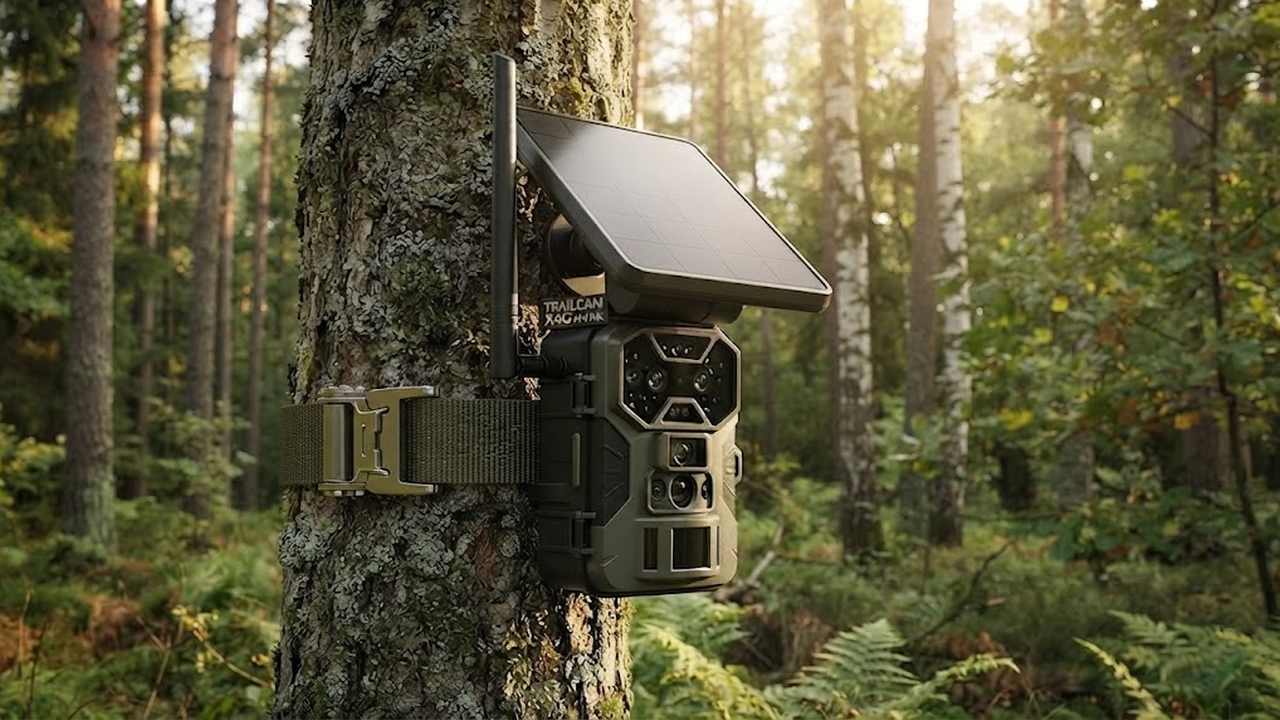
Why "maintenance-free" starts with the battery
Every trail-camera owner knows the feeling: you walk out to check a camera and it is dead. Flat battery, empty card, weeks of footage gone. Running out of power is the single oldest pain in this product category, and swapping batteries in the field — cold hands, fiddly compartments, a box of spares in the truck — is the chore nobody enjoys.
That is the whole reason a solar panel belongs on a trail camera. It is not a luxury feature; it exists to keep the battery from dying in the first place, so the camera just keeps working. When buyers ask for "maintenance-free," what they really mean is: stop making me think about the battery.
What solar actually does for you
The idea is simple. A small panel trickle-charges a built-in rechargeable battery during the day, and that battery runs the camera. Most designs are hybrid: the panel does the daily top-up, and a backup battery covers the lean days.
In normal conditions — a few hours of daylight, moderate activity — a well-built unit can run for months without a manual charge. The real win is not a spec on a page. It is the absence of "it stopped working" tickets, and the data you no longer lose between visits. That is why solar shows up everywhere from remote wildlife monitoring to farm and property security.
Picture a farm owner who checks ten cameras along a fence line. Without solar, that is ten batteries to change every few weeks, in every season, often with cold hands and a ladder. With a well-matched panel and battery, those trips shrink to an occasional glance. The camera stops being something you service and starts being something you simply use — and that shift is exactly what "maintenance-free" is supposed to mean.
Where solar does NOT save you
Honest suppliers say this up front, because a buyer who understands the limits is a buyer who is still happy a year later.
- Solar needs light, not heat. Panels still charge on cloudy days, just slower. Short winter daylight and snow on the panel cut output sharply.
- The panel gets dirty. Dust, pollen, and bird droppings can drop efficiency by 10–20%. A quick wipe a few times a year keeps it healthy.
- Placement is everything. Face the panel toward the sun and keep it out of shade. Under a thick canopy, no panel will keep up.
- Batteries age. The internal cell is the part most likely to need replacement after a couple of years, and cold weather can pause charging until it warms.
- Cellular means a data plan. If you want photos sent to your phone, the camera needs signal and a recurring plan. Wi-Fi models avoid the plan but only work nearby.
None of this is a dealbreaker. The difference between "never maintain" and "maintain a little" comes down to how the solar is built — which brings us to the part most listings skip.
The form-factor problem nobody talks about
Here is what the market actually wants: a solar 4G trail camera in one piece, the way all-in-one solar Wi-Fi cameras already exist. One device, no extra parts, stick it up and forget it. That form factor would slash both installation time and after-sales calls, and buyers ask for it constantly.
Almost no manufacturer ships it. Putting the solar panel, the battery, and the 4G radio into a single body runs straight into hard limits — size, weight, cost, and final price all climb, and most factories cannot make the math work.
So what do most brands actually sell today? A camera, plus a separate solar panel, plus a bag of mounting brackets and fixtures to hold that panel to a tree. More parts means more install steps, more things to loosen or break in the field, and more "it fell off" support tickets.
Our answer sits between the two. We build the battery and solar as one detachable module you clip on or off in seconds — no awkward brackets, no tree-mounted panel to aim. The camera body stays clean and simple; installation is one step; if the module ever needs service, you swap the module, not the whole camera. It is not the impossible all-in-one 4G, but it removes the mess that separate-panel kits create.
What separates a reliable manufacturer from a trading factory
This is where sourcing decisions are won. Two solar cameras can look identical on a listing and perform very differently in the field a year later.
| Aspect | Typical trading factory | What Xlinkcam builds for |
|---|---|---|
| Form factor | Camera + separate panel + mounting brackets | Detachable solar + battery module, no brackets |
| Power design | Small panel, small battery; struggles in cloudy weeks | Efficient panel paired with a battery sized for low-sun days |
| Cellular compliance | Often no EU radio certification | CE-RED (2014/53/EU) on cellular models — clears EU customs |
| Build quality | Varies by batch | BSCI- and ISO-certified factory, consistent QC |
| Weathering | Basic seal | IP66 housing built for years outdoors |
| Customization | Fixed product | Define body, firmware, and platform from scratch (0 to 1) |
| Business model | Tied to one plan | You choose: free cloud, paid plan, or self-host |
| Warranty | Vague | Backed by real return-rate data |
Two points deserve a plain explanation.
First, the CE-RED certification. If your solar cellular cameras ship to Europe, EU law requires radio-equipment compliance. Many factories cannot provide it, which turns a smooth import into a customs problem. We hold it as standard on cellular models.
Second, the business model is yours to set. Solar cellular cameras usually imply a data plan. We do not lock you into ours. You decide whether to offer free cloud, a paid plan, or let customers run their own server — and we build the product around that choice.
Choosing the right solar trail camera for your market
Start from the deployment, not the brochure. A long, sunny perimeter with no signal? A Wi-Fi or standalone model with a big battery may beat a cellular one. A remote site that must report daily? A cellular unit with an efficient panel and adequate internal storage is the safer bet.
Running a hunting lease where guests expect photos on their phones? A cellular unit with a healthy solar margin keeps the camera live through the season without you hauling a ladder and a box of spare batteries. The point is to match the camera to the job, not to the loudest number on the box — and to ask the supplier how the unit behaves on the worst day of the year, not the best.
Either way, ask the manufacturer for honest numbers: battery capacity, real-world runtime in low sun, operating temperature, and proof of certification. A supplier who answers plainly is one you can still call in two years.
If you are scoping an OEM or ODM solar camera, our OEM/ODM guide walks through the questions to settle early — and our API documentation covers how the data side connects to your platform. You can also review our full technology overview and certifications.
The bottom line
A maintenance-free solar trail camera will not eliminate every site visit. What it eliminates is the visit you used to make every few weeks just to keep the thing alive — and the battery anxiety that comes with it. Pick a manufacturer that is honest about the limits, certified for your market, and smart about how the solar is built, and "low-maintenance" becomes real.
Want to talk through specs and volumes for your market? Reach out and we will scope it with you.